
Backflow Testing: Orange County Guide
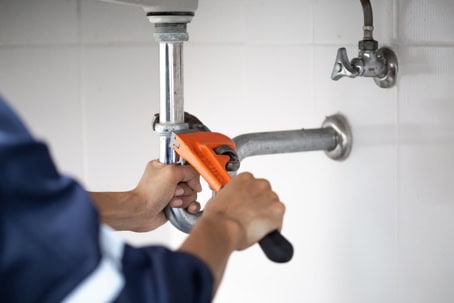
Routine backflow testing protects municipal and private water systems from hazardous cross-contamination caused by pressure shifts. Clean municipal water flows into buildings under constant pressure, but sudden pressure drops can pull dirty water in reverse. A mechanical backflow prevention device isolates clean water from potential pollutants, but moving parts can degrade over time. This guide outlines how backflow occurs, why annual verification is required, and what property managers should anticipate during a site inspection.
Understanding Water Flow Reversals and Contamination Risks
Potable water systems are engineered to travel in a single direction from the supply main into your building fixtures. When supply pressure drops or downstream pressure exceeds incoming pressure, liquid can flow backward through connected pipes. This reversal introduces contaminated water into plumbing lines intended for drinking, cooking, and washing.
Backpressure vs. Backsiphonage
Backflow generally happens under two distinct mechanical conditions: backpressure and backsiphonage. Backpressure occurs when downstream equipment, like a boiler or pressurized pump, generates more pressure than the utility supply line. Backsiphonage happens when supply pressure drops sharply, creating a vacuum that pulls liquids toward the main. This pressure loss often stems from nearby water line breaks, routine hydrant flushing, or heavy emergency water use during firefighting. When line pressure fluctuates, a mechanical backflow preventer creates an automatic physical barrier that keeps water flowing in only one direction.
Common High-Hazard Connections in Orange County
Any direct link between potable lines and non-potable liquids creates a cross-connection. Residential irrigation systems represent one of the most common residential hazards. Without proper safeguards, stagnant water containing fertilizers or chemical treatments can flow backward into the public drinking water supply. Commercial facilities and high-hazard systems often require a reduced pressure zone assembly to provide the highest level of mechanical protection. Properties with fire sprinkler networks, dedicated chemical processing lines, commercial dishwashers, and hydronic heating loops also require strict isolation from the primary utility feed.
New York State Regulations for Containment and Testing
New York maintains strict legal frameworks to protect municipal water infrastructure from cross-contamination. State regulations on cross-connection control require regular inspections to verify that protective containment equipment remains fully functional. Under these rules, property owners are responsible for containing potential contaminants directly at the service connection. Local water authorities enforce these mandates across Orange County communities like Goshen, Chester, Warwick, and Newburgh, though Astar Heating & Air does not provide plumbing services in Middletown or Port Jervis.
The Annual Compliance Mandate
Water purveyors throughout New York enforce an annual backflow test to confirm that relief valves, springs, and internal seals perform properly under pressure. Mechanical parts suffer normal wear from sediment buildup, mineral deposits, and repeated thermal cycling. Scheduling regular backflow testing keeps your property compliant with municipal codes and protects neighboring water lines from unintended chemical exposure. If a property owner neglects required evaluations, local water suppliers can issue violation notices or terminate water service until certified proof of compliance is submitted.
Certified Technicians and Inspection Documentation
State regulations dictate that all containment testing must be completed by a certified backflow prevention tester. Uncertified contractors cannot submit the official compliance paperwork accepted by municipal water authorities. Business facilities with dedicated fire lines, commercial kitchens, or specialized processing equipment rely on commercial plumbing containment systems that require meticulous documentation. Following every inspection, the certified technician records differential pressure readings on standardized forms and delivers copies to both the owner and the appropriate water district.
The Step-by-Step Backflow Inspection Procedure
Scheduling backflow testing ensures that every mechanical component inside the assembly is operating within strict engineering tolerances. The entire diagnostic process is efficient and usually completed in under an hour. Water service to the specific line must be temporarily shut off while the technician tests the device.
Calibrated Diagnostic Checks
A certified technician connects specialized differential pressure gauges to the test ports on the backflow assembly. The inspector observes the gauges closely while opening and closing individual shut-off valves. This walkthrough verifies that the internal check valves seal tight against backward flow and hold required line pressure. For reduced pressure assemblies, the tester also confirms that the relief valve opens at the proper pressure differential to discharge water before it can enter the clean supply.
Addressing Wear and Valve Failures
Assemblies that fail an evaluation typically suffer from worn rubber discs, damaged springs, or grit lodged in valve seats. When an assembly fails, it must be rebuilt or replaced to restore containment. Certified technicians carry replacement internal parts to perform repairs on-site whenever possible. Once replacement parts are installed, the technician retests the system immediately to generate passing test documentation for the municipal purveyor.
Safeguarding Clean Water Across Orange County
Maintaining working containment valves is a fundamental legal obligation for local property owners and a vital public health measure. Annual inspections protect your facility or household from contaminated water while preventing costly municipal fines and water service interruptions. Working with a licensed professional ensures your containment hardware receives proper diagnostics and accurate state documentation before local deadlines arrive.
Schedule Your Annual Inspection With Astar Heating & Air
Protect your drinking water and keep your property compliant with New York State regulations. Astar Heating & Air has been serving communities in the Mid-Hudson Valley, NY since 1976 with trustworthy service and experienced, licensed professionals. Our certified technicians dispatch from Middletown, NY, to complete inspections, repairs, and state paperwork for residential and commercial properties throughout Orange County, including Goshen, Warwick, Chester, and Newburgh.
Contact our team today to reserve your service date. Call us directly to speak with a specialist. You can also reach our main office at 36 Wes Warren Dr, Middletown, NY 10941 to arrange your upcoming inspection.